
My understanding, like many people’s, of overdose prevention centres (OPCs) or drug consumption rooms (DCRs) was completely theoretical, limited to things I had read about and seen online. An OPC/DCR is a healthcare facility where people can consume drugs while supervised, rather than on the streets or in risky and unhygienic conditions. It allows for immediate responses to overdoses in order to reduce avoidable drug deaths. My limited knowledge came from pictures and videos, mainly of the Thistle in Glasgow, which opened just over a year ago, and looks like something akin to a GP service: clean, efficiently run and perhaps slightly clinical.
So when my mum and I went to Lisbon on holiday and I got the opportunity to visit the OPC there, it was something I didn’t want to pass up. To my surprise, my mum wanted to come with me. She is liberal and compassionate but, like a lot of people, mostly unfamiliar with the world of legal regulation and harm reduction.
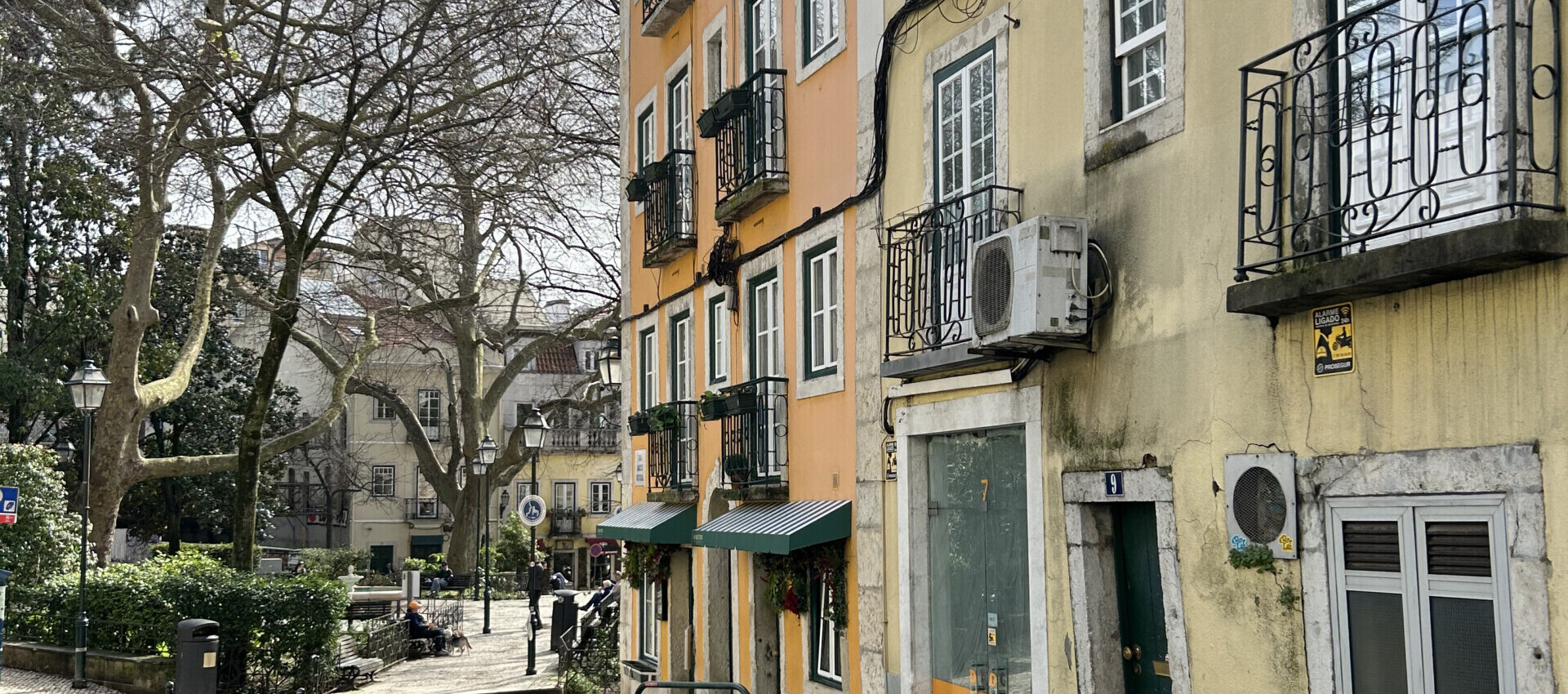
Let me set the scene. It’s February and it hasn’t stopped raining since last year. The Portuguese are staying indoors. A confused and slightly suspicious uber driver drops two English tourists quite far from the city centre.
It’s a hard experience to describe. I want to say I enjoyed it, but that seems like the wrong word. Any apprehension I felt about being in an ex-favela in a city I didn’t know immediately dissipated when we stepped through the doors. It was busy, probably in part due to the weather, but we seemed to stick out less than in the tourist sites of central Lisbon, and people went about their day around us. We were shown around by Daniel, the lead technician. At first, we talked in the staff area and he told us about the place. Despite the fact that drugs were decriminalised in Portugal in 2001, the centre has only been running for just over 4 years, a testament to the funding challenges and general pushback that these kinds of projects face.
We were shown storerooms full of supplies: antibacterial wipes, syringes, pipes, tourniquets. All things that if not provided would either be gone without or rustled up from old cans and other general waste. We were then led through to the inhalation and injecting areas. The inhalation room was by far the most popular. People sat around tables, smoking, at capacity, on a one-in one-out basis. A staff member sat just outside the rooms, at a desk with a computer, through which a monitoring system kept track of all those who were currently on site. I’ve asked my mum to write some of her thoughts here because I know this is what she found the most memorable:
‘To physically see on a screen in front of us the names of the people using the supervised rooms together with important information on how long they had been in the room, what drugs they had on them and how they were taking them suddenly made the amount of care provided feel more real. The level of compassion and humanisation was in fact very overwhelming.’
Next door, a relatively empty injecting room, monitored by a nurse that also works in a local hospital. Daniel showed us the vital Naloxone supplies, a life-saving drug that reverses the effects of an opioid overdose. He told us that since opening, they had had 68 overdoses, fortunately none fatal. An incredible feat for over 4 years of constant, daily service provision, and evidence of the harm reduction potential of OPCs. However, they cannot account for the overdoses that occur in the wider neighbourhood outside of their opening hours. They only close on Christmas Day and New Year’s Eve, but in an ideal world, they would be open 24/7, with more staff. It’s the only service of its kind running in the country, besides one in Porto.
For me, the biggest take away was the overwhelming attitude of care. There was clearly deep care between the staff and the service users. A woman pops her head in to say hi to the nurse monitoring the injection room before going to smoke. It’s not just about drug consumption, they have showers, laundry facilities, clean clothes, and a TV. They’ve partnered with local cafes and business owners; the boxing gym next door provides self defence classes for women. A large percentage of people who use OPCs are unhoused and more general support is needed in tandem with drug consumption services.
They have established themselves as a vital community service, just like a local pharmacy, supermarket or bank. They monitor and respond to the needs of those using the service and it felt like a rare example of something truly built around altruism and care. I have no doubt that the UK would be far better off if we had an OPC in every city and town.
The staff are attentive and selfless individuals, just like doctors and nurses in hospitals. In this country, they would be treated like criminals. The Thistle in Glasgow is an exception to the culture of moral superiority we have in the UK about people who use drugs, only made possible by a specific prosecution policy enacted by Scotland’s Lord Advocate. Because of the ongoing criminalisation of drugs in the UK, the Thistle is bound by rules that the OPC in Lisbon isn’t. For example, they are not allowed to provide tourniquets.
Back in England, my mum tells me it was the highlight of her trip. She tells her friends all about it over coffee, when they ask about her holiday. Perhaps slightly shocked, and working against their own learnt stigmas, a seed is planted in the mind of someone who has never considered that there might be an alternative to the current way.
To continue to move forward, we need an attitude shift. It’s time we all saw people who use drugs as, exactly that, people. If everyone treated the more vulnerable in their community with the unwavering care of the service providers in Lisbon, I think the UK would be a much nicer, and safer place, for all.



Leave A Comment